
Kandiyohi County Arrest Records and Charges
Kandiyohi County arrest records can appear in Sheriff records, the in-custody roster, active warrant data, and public criminal-history channels. A booking row may show a name, MNI, sex, age, booking number, intake date, charge descriptions, status, and bail or bond information. That is not the same as the court charge record. The court charge record begins when the prosecutor files formal charges with District Court.
Kandiyohi County Attorney Shane Baker is identified on the county officials page. The County Attorney serves as chief prosecutor for adult felony and juvenile crimes, reviews law-enforcement investigations, files criminal complaints, presents cases before a grand jury when needed, appears in hearings and trials, and makes sentencing recommendations. City attorneys may handle some misdemeanors and gross misdemeanors in larger cities, but the court case still moves through District Court when filed.
The expungement-eligibility source for the arrest and charge topic is Minnesota Statutes section 609A.02.
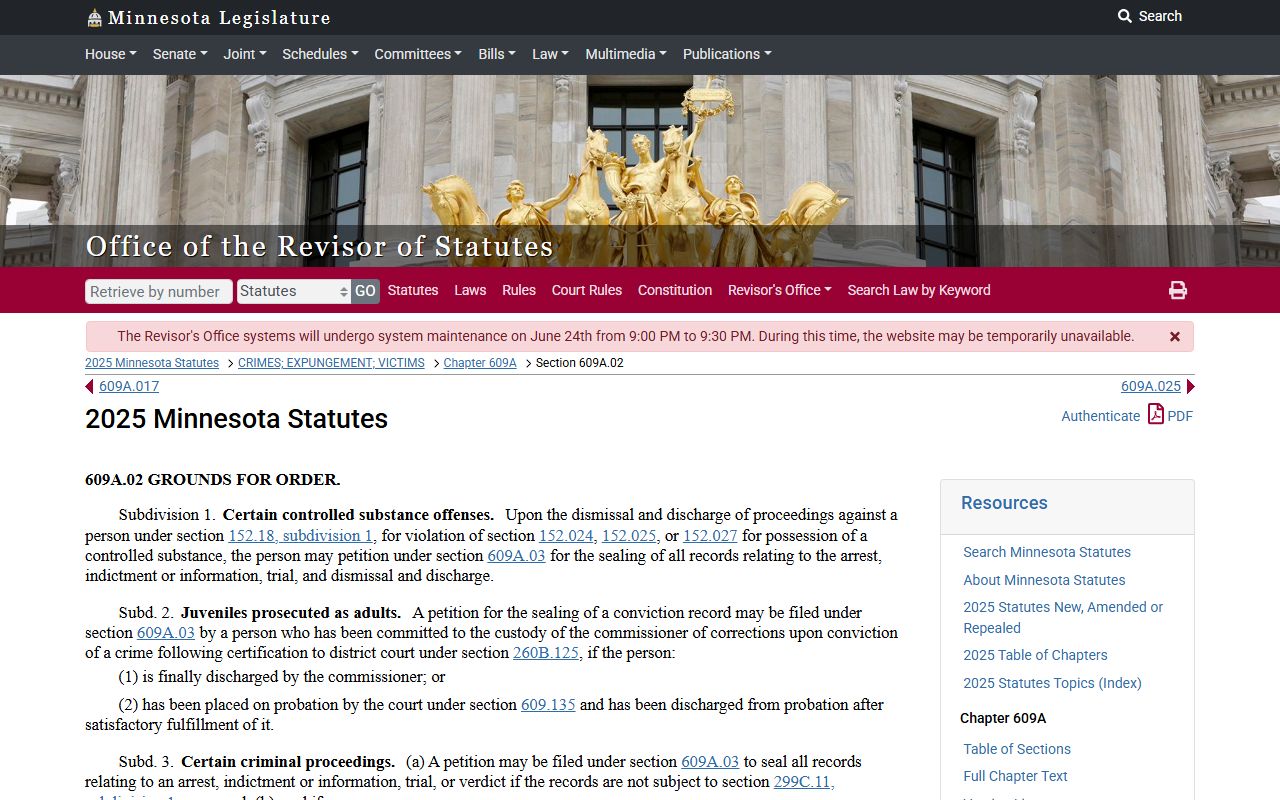
That source matters because some charge and conviction records can later be sealed, while other records have statutory limits.
Find Kandiyohi Arrest Records
Use the Sheriff channel for arrest and booking data, then use court channels for filed charges. The Kandiyohi County Jail in-custody roster is the current custody source, while Sheriff records requests cover law-enforcement records not shown online. MCRO Case Search is the court route after formal charges create a District Court case. BCA Public Criminal History Search is the state-level criminal-history route.
- Check the Kandiyohi County Jail in-custody roster for current booking, charge, and bail or bond rows.
- Use the active warrant listing if the arrest or charge path involves a current warrant.
- Search MCRO by case number or defendant name after a District Court case is filed.
- Use BCA Public Criminal History Search for statewide public criminal-history data.
- Request Sheriff records in person, by phone, or by email when public law-enforcement data is not shown online.
Sheriff records requests can be made in person, by phone at 320-214-6700 Ext. 2, or by email to KSD-records@kcmn.us. The Sheriff records page states that requests are processed within 10 business days.
The Sheriff Records source documents those request channels.
The Sheriff records page is the right fallback when the online roster or warrant list does not answer a public-records question.
Jail Roster Charge Fields
The Kandiyohi County Jail roster is an arrest and custody tool, not a final criminal case record. It is still useful because it can show charge descriptions before the full court record is easy to locate. The roster can display MNI, name, sex, age, booking number, intake date, charges, status such as BOND/BAIL SET or SENTENCED, and bail or bond information. A charge row may reflect an allegation, warrant, hold, or custody status rather than final guilt.
| Roster Field | What It Can Show |
|---|---|
| MNI | Local master name index number used in the custody system. |
| Booking Number | Custody booking identifier tied to the current jail intake. |
| Intake Date | Date the person entered jail custody. |
| Charges | Statute numbers, descriptions, level codes, or offense labels as posted by the roster. |
| Status | Custody or case status such as bond set, sentenced, hold, or similar public roster terms. |
| Bail/Bond | Posted public bail or bond information when the roster displays it. |
The in-custody roster source shows the jail-side field set.
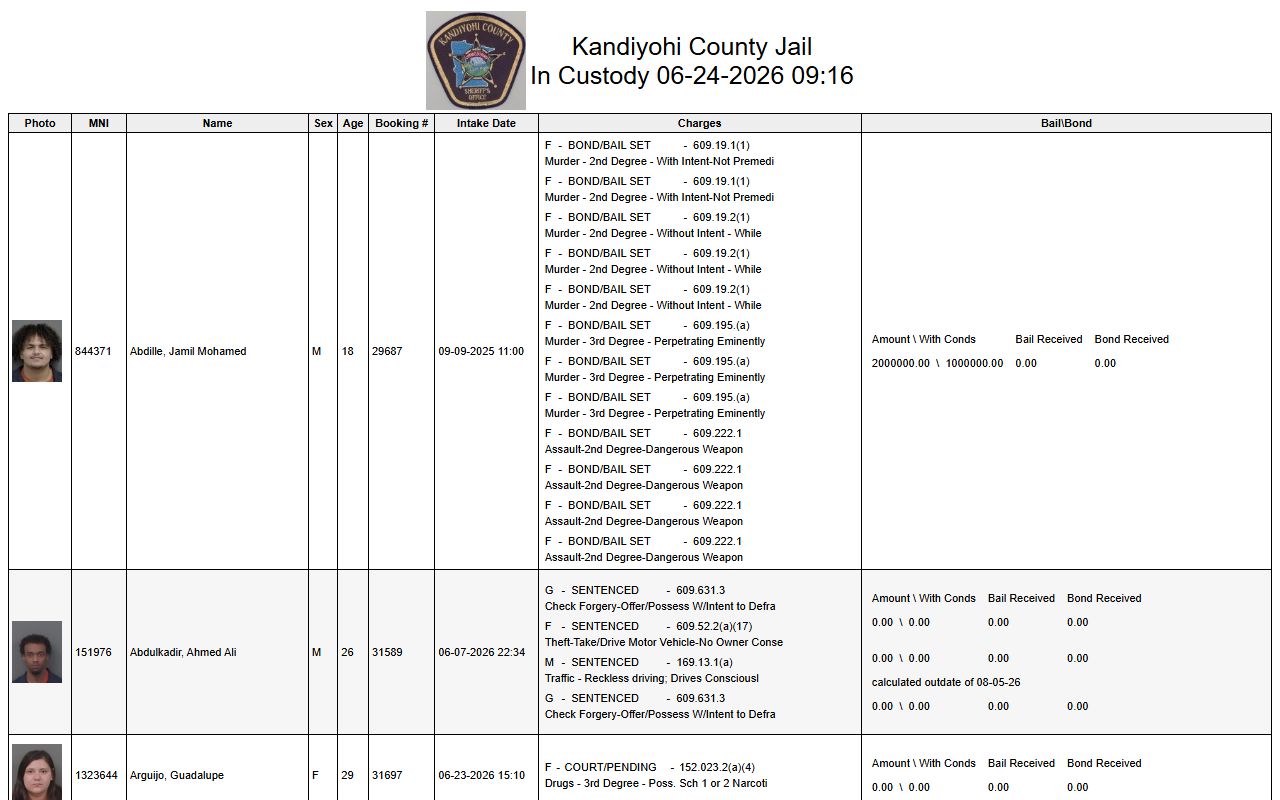
The roster helps connect an arrest to a name and current custody status, but the court file must be checked for final charge outcomes.
Charging Documents After Arrest
Charges after arrest become a court record through a charging document. Minnesota criminal cases often use a complaint for charged offenses. Serious felony matters can involve grand jury action, and the County Attorney duties page notes that the office may present cases before a grand jury. The precise document type depends on the offense, prosecution route, and court procedure.
| Complaint | Information | Indictment | |
|---|---|---|---|
| Filed By | Prosecutor based on law-enforcement investigation. | Prosecutor when allowed by procedure. | Grand jury after presentation of evidence. |
| Common Use | Common starting document for Minnesota criminal cases. | Formal prosecution document in some criminal systems. | Serious felony or grand-jury matters. |
| What It Lists | Counts, statutes, offense facts, probable-cause basis, and requested court action. | Formal charge counts and legal allegations. | Grand-jury approved charge counts. |
| Where It Appears | District Court case file if public and available. | Court case file when used. | Court case file after indictment. |
Not every public user can see every charging document online. MCRO Document Search requires a case number and only returns public documents available through remote access. Court administration is the fallback for certified copies and courthouse access.
Charge Status and Meaning
Charge status can change as prosecutors review evidence and the case moves through court. One arrest can lead to multiple counts, and each count can resolve differently. A record may show an original charge, later amendment, reduction, dismissal, guilty plea, acquittal, sentence, probation violation, or warrant. The final disposition should be read count by count.
| Status | What It Means |
|---|---|
| Pending | The charge is filed or alleged, but the court has not reached a final outcome. |
| Amended | The charge was changed, often to a different count, statute, severity, or wording. |
| Reduced | The charge moved to a lower severity or lesser offense as part of case handling. |
| Dismissed | The court or prosecutor ended that count without a conviction on that charge. |
| Convicted | The defendant was found guilty or entered a guilty plea on that charge. |
| Probation Violation | A later allegation that sentencing conditions were not followed. |
Warrants Connected to Charges
Arrest and charge records can also connect to warrants. Kandiyohi County Sheriff publishes an active warrant listing as a report, not a name-search form. It can show warrant number, name, date of birth, date of warrant, offense level, and description. Research found that a bond or bail amount exists in the report HTML as a hidden table column, but it is not displayed to public users in the visible table.
The active warrant listing is a source for court arrest and charge records.
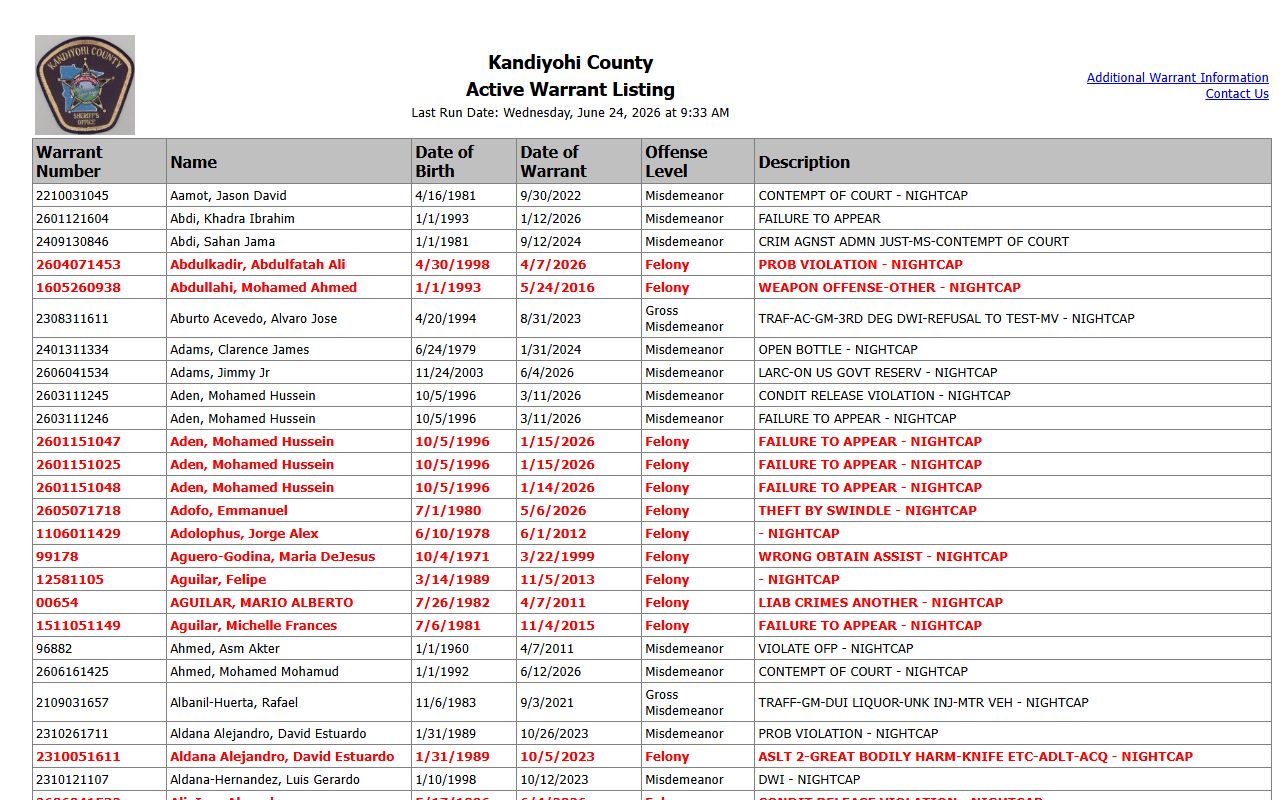
Warrant rows can explain why an arrest occurred, but the District Court case should be checked for charge status and disposition.
Common warrant descriptions found in the research include failure to appear, probation violation, contempt of court, DWI, OFP violation, theft, controlled substance, and assault. The Sheriff warns that warrant listings change and people should not confront wanted persons.
Charges vs. Convictions
An arrest record or charge row is not proof of conviction. A charge is an accusation. A conviction is a court outcome. That distinction is critical in Kandiyohi County because jail roster rows, warrant descriptions, BCA data, and MCRO case entries may each show a different stage of the same event.
| Charge | Conviction | |
|---|---|---|
| Meaning | An alleged offense filed or listed after arrest. | A guilty plea, verdict, or qualifying final disposition. |
| Where Seen | Jail roster, warrant list, complaint, MCRO charge section, or BCA record. | Court disposition, sentence entry, and criminal-history data after qualifying report. |
| Reader Task | Check whether it was amended, reduced, or dismissed. | Check sentence, probation, fines, restitution, and expungement status. |
Sealed vs. Expunged Charges
Minnesota expungement law can restrict public access to some charge and conviction records. Chapter 609A controls many criminal expungement paths. Section 609A.015 provides automatic expungement for certain eligible records, while section 609A.03 covers petition-based requests. Section 609A.02 also states that records of convictions requiring registration under section 243.166 may not be expunged.
| Sealed | Expunged | |
|---|---|---|
| Public Access | Hidden from ordinary public view by rule, statute, or order. | Sealed under Minnesota expungement law when the record qualifies. |
| Effect on Agencies | Some authorized access can remain. | Agency access depends on statute and court order. |
| Eligibility | Depends on case type, rule, and court order. | Depends on Chapter 609A, automatic eligibility, or petition decision. |
Note: A dismissed charge can still appear in public records until a rule, statute, or court order limits access.
BCA Charge and Criminal History
BCA Public Criminal History Search is the statewide criminal-history channel documented for Kandiyohi County research. It should be used when the question is a public criminal-history search rather than a court docket lookup. MCRO is still needed for filed case details, Register of Actions entries, hearings, documents, and court dispositions.
The BCA CHS search source documents the statewide public criminal-history path.
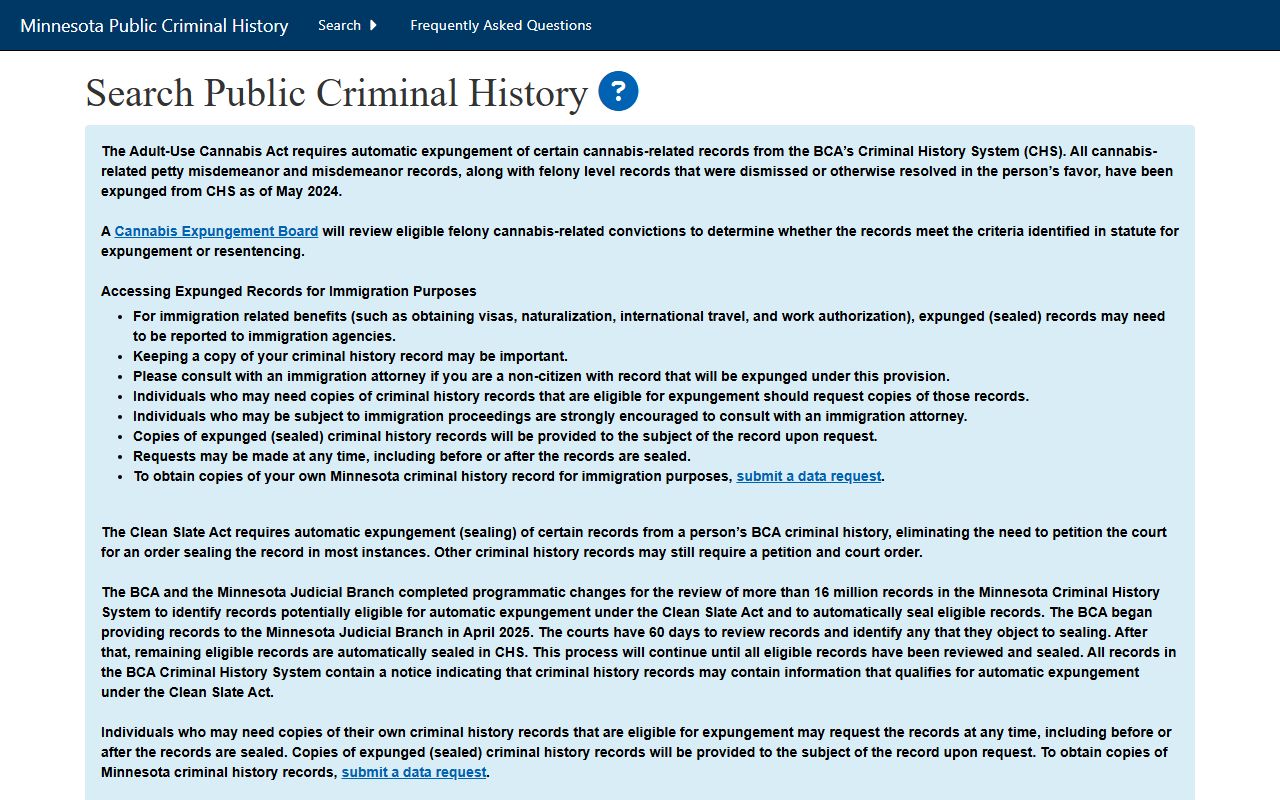
BCA CHS is helpful for statewide public criminal-history data, but it does not replace the local court file or the Sheriff custody roster.
Important: Informal arrest, charge, and court searches should not be used for FCRA-regulated decisions.
Restricted Charge Records
Restricted charge records include juvenile matters, sealed and expunged records, confidential data, and records withheld from MCRO remote access. MCRO also excludes party street addresses and comment fields. Domestic abuse and harassment case types are not displayed online, and juvenile delinquency felony 16 case types are excluded from remote display.
Every documented access channel should be matched to the record type. Sheriff records are the law-enforcement path. The jail roster is current custody. The active warrant list is warrant status. MCRO is the District Court case path. BCA CHS is statewide public criminal history. Court administration is the certified-copy and courthouse-access fallback.