
How to Search Kandiyohi County Court Records
Kandiyohi County Court records are searched first through Minnesota Court Records Online, often called MCRO. MCRO covers Minnesota District Court records, including Kandiyohi County District Court in Willmar. It has Case Search, Document Search, Hearing Search, and Judgment Search. Case Search can use a person name, business name, case number, citation number, attorney name, or attorney bar number. Document Search is narrower because it needs a case number.
The best search method depends on what is known. A case number is the cleanest path. Name searches can miss pending criminal, traffic, and petty misdemeanor cases with no conviction, and MCRO warns that identity matches may be unreliable when people share names or dates of birth. For a Kandiyohi-only search, expand the added options and select Kandiyohi from the county court locations list.
- Open MCRO Case Search and accept the terms.
- Choose Name, Case Number, Citation Number, or Attorney.
- Use additional search options for date of birth, filed date, case category, case status, and Kandiyohi County court location.
- Open the case details and read the Register of Actions, hearings, parties, and public documents.
- Contact Kandiyohi County District Court administration for certified copies, older records, or files that are public at the courthouse but not online.
| MCRO field | How it helps in Kandiyohi County |
|---|---|
| Case Number | Targets a known file, such as a local number beginning with 34. |
| Name | Searches people or businesses, with exact and Sounds Like options. |
| Citation Number | Finds many traffic and petty misdemeanor matters. |
| Case Category | Filters civil, criminal, family, probate, or mental health records. |
| Court Locations | Limits statewide results to Kandiyohi County District Court. |
The official Minnesota Pay Fines page is also relevant for citations and traffic fines. The captured county image below comes from that official payment resource.
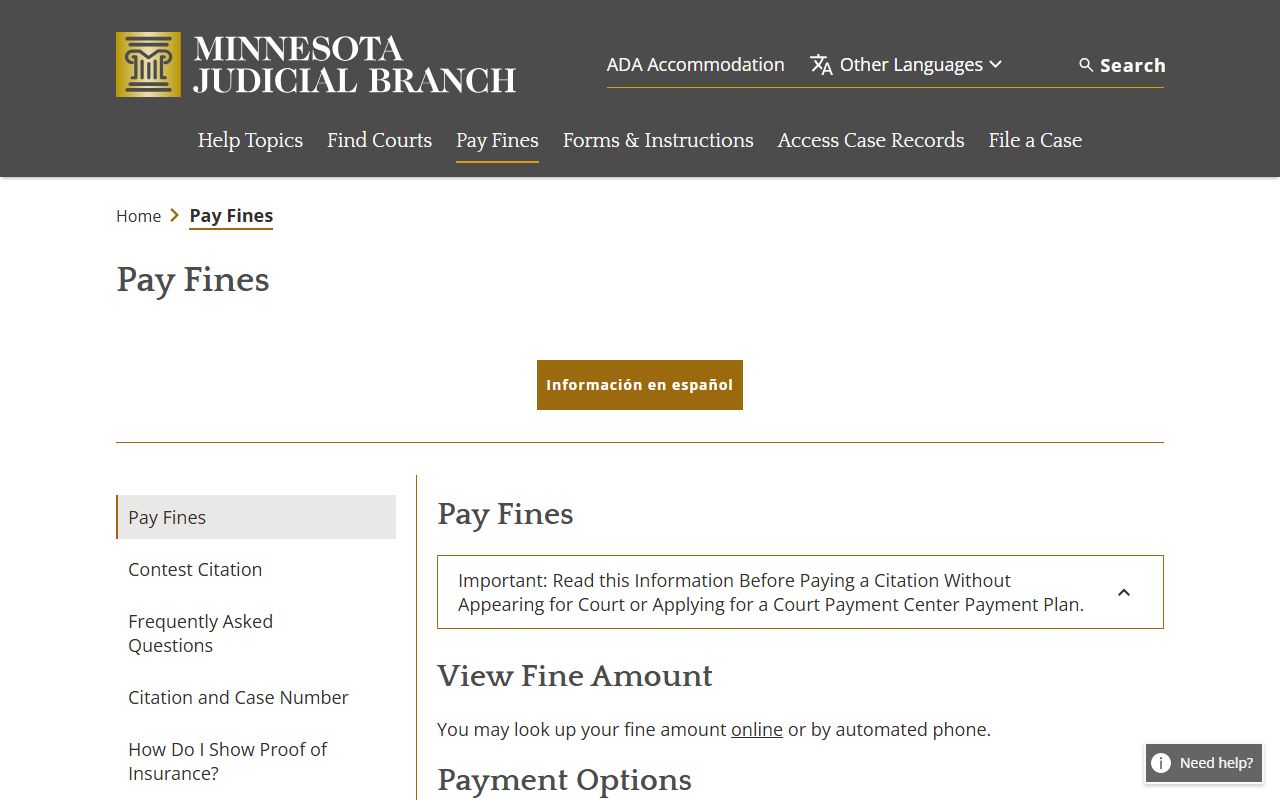
Use payment tools with care because paying a citation can count as a guilty plea under the court's stated warning.
The Kandiyohi County Judicial System
Kandiyohi County does not have separate justice courts, county courts at law, or municipal court record systems for these topics. The local trial court is Kandiyohi County District Court, a county courthouse location within the Minnesota Judicial Branch and the Eighth Judicial District. The court's official jurisdiction statement covers civil, family, probate, juvenile, criminal, and traffic cases filed in the county.
Appeals usually move from District Court to the Minnesota Court of Appeals. The Minnesota Supreme Court is the state court of last resort. The Eighth Judicial District is an administrative district, not a separate trial counter for local record requests.
Case flow: Kandiyohi County District Court › Minnesota Court of Appeals › Minnesota Supreme Court
| Court | Jurisdiction | Case Types |
|---|---|---|
| Kandiyohi County District Court | General trial jurisdiction | Civil, criminal, family, probate, juvenile, and traffic |
| Minnesota Court of Appeals | Intermediate appellate review | Most appeals from District Court and state agencies |
| Minnesota Supreme Court | Final state-law review | Selected appeals, rules, and statewide legal issues |
The Minnesota Judicial Branch court-structure source is shown in the official state overview image below.
That statewide structure matters locally because Kandiyohi court records remain District Court records even when a case involves a city citation or local prosecution.
Kandiyohi County Courthouse Contacts
The courthouse, recorder, and sheriff are different offices. Kandiyohi County District Court at 505 Becker Avenue SW in Willmar is the court-records office for case files, calendars, hearings, and certified court copies. The Kandiyohi County Recorder at 400 Benson Ave SW handles marriage certificates, real estate records, vital statistics, and other non-court records. The Sheriff's Office and jail are at the Law Enforcement Center on NE 23rd Street.
Types of Kandiyohi County Court Records
Kandiyohi County District Court produces the main public court record categories. Civil files may include complaints, answers, motions, orders, judgments, name changes, tax matters, and civil writs. Criminal files include complaints, formal charges, appearances, plea activity, trial settings, dispositions, sentencing, probation violations, and financial obligations. Family files include dissolution, custody, paternity, parenting time, and child support. Probate files include estates, guardianships, conservatorships, trusts, wills, notices, and orders.
Some record types overlap with non-court offices. Marriage licenses and certificates are Recorder records, while divorce decrees are District Court records. Jail booking rows are sheriff records, while the filed criminal case is a District Court record. A traffic citation may be searchable through MCRO or payable through the Court Payment Center, but a state driver history is held by Driver and Vehicle Services.
- Criminal records - filed charges, court events, pleas, dispositions, sentences, and probation matters.
- Civil records - complaints, motions, judgments, conciliation matters, name changes, and related orders.
- Family and divorce records - dissolution, custody, paternity, parenting time, and child support matters.
- Probate records - estates, guardianships, conservatorships, trusts, wills, and letters when public.
- Traffic records - citation, petty misdemeanor, fine, hearing, and conviction information held by District Court.
What Kandiyohi County Court Records Show
A Kandiyohi County court record usually starts with a case number. Local examples in the court calendar include `34-CV-26-240`, `34-CR-25-488`, `34-CO-26-113`, `34-JV-25-196`, and `34-VB-26-411`. The `34` prefix identifies Kandiyohi County in Minnesota court numbering. The middle code points to the case type, such as civil, criminal, conciliation, juvenile, or traffic and violations bureau.
| Field | What It Shows |
|---|---|
| Case Number | County prefix, case category code, year, and sequence number. |
| Filing Date | Date the case or document entered the District Court system. |
| Parties | Plaintiffs, defendants, petitioners, respondents, attorneys, or agencies. |
| Register of Actions | Chronological docket list of filings, hearings, orders, and case events. |
| Disposition | The outcome of a charge, claim, motion, judgment, or case. |
| Financial Data | Fines, fees, restitution, surcharges, bail, bond, judgments, or satisfaction details. |
The MCRO Case Search screen is the central online entry point for this field-level information.
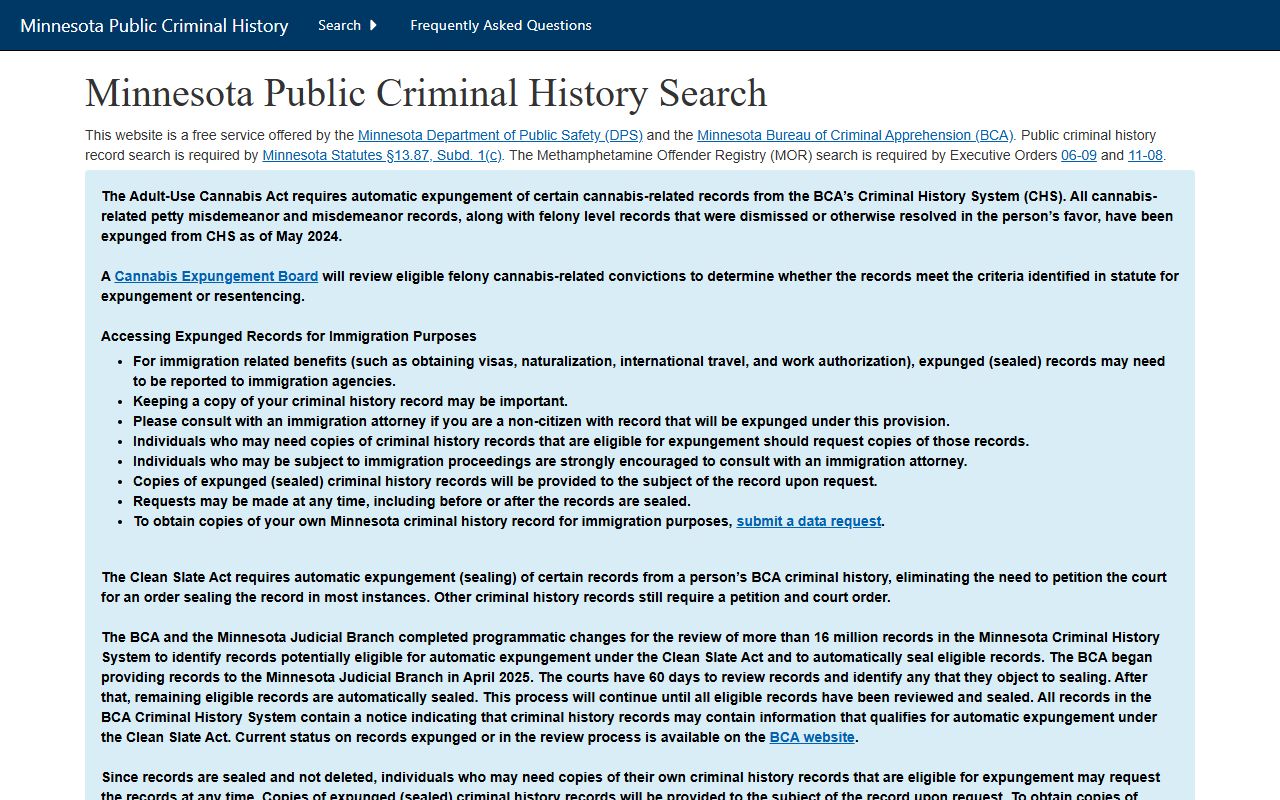
Case details should be read with the Register of Actions because case type alone may not show the final result.
Public Access for Kandiyohi County Court Records
Minnesota court access is controlled by Judicial Branch public-access rules and state data laws. For Kandiyohi County, that means a record can be public but still unavailable through remote MCRO search. Courthouse public access terminals may show public material that MCRO does not display online. Certified copies are issued by District Court administration, not by downloaded screenshots.
Key Statutes:
Minn. R. Pub. Access 4 identifies court case records that are not publicly accessible.
Minn. R. Pub. Access 8 explains inspection, copying, bulk access, and remote access limits.
Minn. Stat. Section 13.03 states that government data are public unless classified otherwise.
Minn. Stat. Section 13.87 governs public criminal history data released through the BCA.
Records That Are Restricted or Confidential
MCRO excludes several categories from remote public display. Domestic abuse OFP and harassment HRO cases are not shown online because of federal VAWA-related limits. Child protection and juvenile delinquency felony 16 case types are not displayed. Public documents in civil commitment cases are not available through MCRO, and party street addresses and comment fields are excluded.
Sealed and expunged records are also restricted. Minnesota Chapter 609A controls criminal expungement, including petition-based sealing and automatic expungement for some eligible records. A sealed court record may still be visible to agencies or people named in the order or statute, so a missing public search result does not always mean the event never occurred.
Treatment Courts and Diversion
Minnesota groups Adult Drug Courts, DWI Courts, Family Dependency Treatment Court, Juvenile Drug Court, Mental Health Court, and Veterans Court under the treatment-court umbrella. The research did not confirm a separate named Kandiyohi County treatment court entry, so local eligibility should be checked with District Court administration, defense counsel, the prosecutor, or community corrections.
The Kandiyohi County Attorney's duties page adds a local path outside the treatment-court label. It notes juvenile diversion for minor offenses, prosecution of juvenile matters from curfew violations to serious felony behavior, and family-service roles in child protection and vulnerable-adult matters. These programs can affect court records, hearings, and case outcomes.
Kandiyohi County Sheriff and Jail
The Kandiyohi County Sheriff maintains separate law-enforcement resources that often connect to court searches. The jail roster lists in-custody people with MNI, name, sex, age, booking number, intake date, charges, custody status, and bail or bond data. The Sheriff's Office also publishes a Most Wanted page and an Active Warrant Listing. Sheriff records can be requested in person, by phone at 320-214-6700 Ext. 2, or by email, with a 10-business-day processing statement.
The official Kandiyohi County Sheriff MN mobile app is listed in both app stores and advertises Submit a Tip, Inmate Search, Data Requests, public safety news, and information. The app is not for emergencies. Call 911 for emergencies or immediate sightings of wanted people.
The sheriff's online resources are separate from the full Kandiyohi County criminal court record, which is kept in District Court after a court case opens.
The county jail and roster source is shown in the official sheriff-related image below.
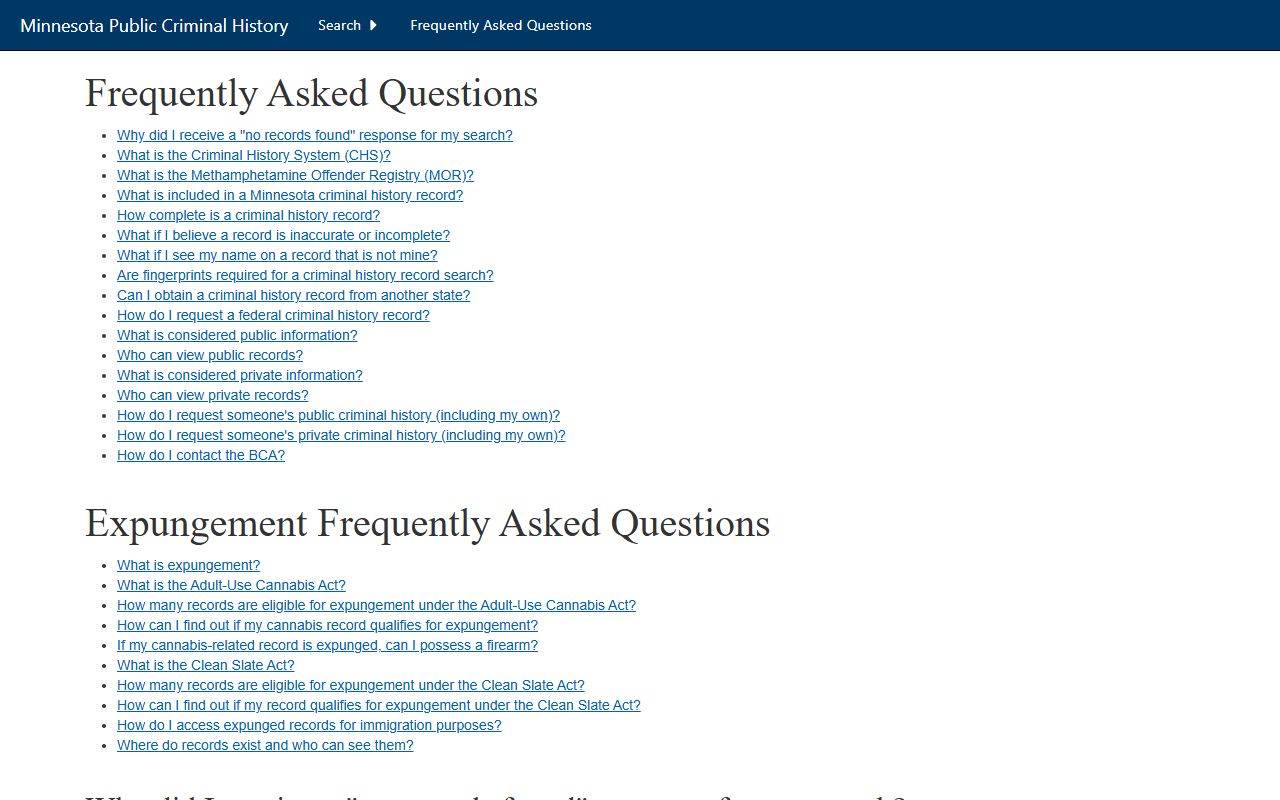
For background checks, use the BCA Public Criminal History Search rather than treating a jail or warrant page as a full criminal history.
Marriage, Divorce, and Probate
Marriage records in Kandiyohi County are Recorder records, while divorce and probate records are District Court records. The Recorder uses the MOMS statewide marriage system for applications and searches, but both applicants must appear at the Recorder's office within 90 days to finish applying. Divorce decrees are not ordered from the Recorder because dissolution cases belong to District Court. Probate is handled by the Probate Division of District Court rather than a standalone probate courthouse.
- Testator
- A person who made a will.
- Personal representative
- The person appointed to administer an estate.
- Conservator
- A person appointed to manage protected financial affairs.
The county's official marriage and Recorder source image is tied to the MOMS marriage system page.
That split is important: marriage certificates come from the Recorder, while divorce decrees and probate orders come from court administration.
Kandiyohi County Court Records Fees
The District Court fee table supplies the court-copy and filing amounts used for Kandiyohi County case records. Recorder fees are separate and apply to marriage and vital records. Always confirm the fee before mailing payment because law-library fees or service-specific charges may apply.
| Item | Amount |
|---|---|
| Certified court copy | $14.00 |
| Exemplified and certified copy | $28.00 |
| Uncertified court instrument copy | $0.00 |
| Report from case management system, 1-50 pages | $5.00 |
| Marriage certificate | $9.00 |
Interpret Kandiyohi County Court Records
Start with the case number, then read the docket entries in order. `CR` points to a criminal case, `CV` to civil, `CO` to conciliation, `JV` to juvenile, and `VB` to traffic or violations bureau examples. A charge is an allegation. A conviction is a final finding or plea that results in conviction. A disposition is the outcome of a charge or case. A Register of Actions is the chronological list of filings, hearings, orders, and events.
Hearing rows can show the party name, location, date and time, judicial officer, hearing type, connection type, and case number. Calendar examples from Kandiyohi included Courtrooms 205, 209, and 210 and hearing types such as arraignment, Rule 8 initial appearance, settlement conference, motion hearing, conciliation hearing, review hearing, and court trial.
Accuracy and Record Limitations
The District Court page says the public calendar is posted at 7:00 a.m. each business day and updated hourly, but printed calendars outside courtrooms or in public lobbies are the most current. MCRO also warns that remote search results are not certified records and that name searches do not verify identity by fingerprint. A missing online result may reflect access rules, search limits, timing, or sealed status.
Note: Confirm same-day hearings, certified copies, and warrant status with the originating office before relying on online records.
Kandiyohi County Access Help
Court access is not only a web search. Kandiyohi County residents may need transportation, language help, public defender screening, or federal court routing. Central Community Transit serves Kandiyohi County, Renville, and Meeker County and describes accessible bus service in the region. Minnesota Judicial Branch pages also surface language links for Spanish, Hmong, Somali, and other languages.
The official Central Community Transit page is one county-specific travel resource for courthouse planning.
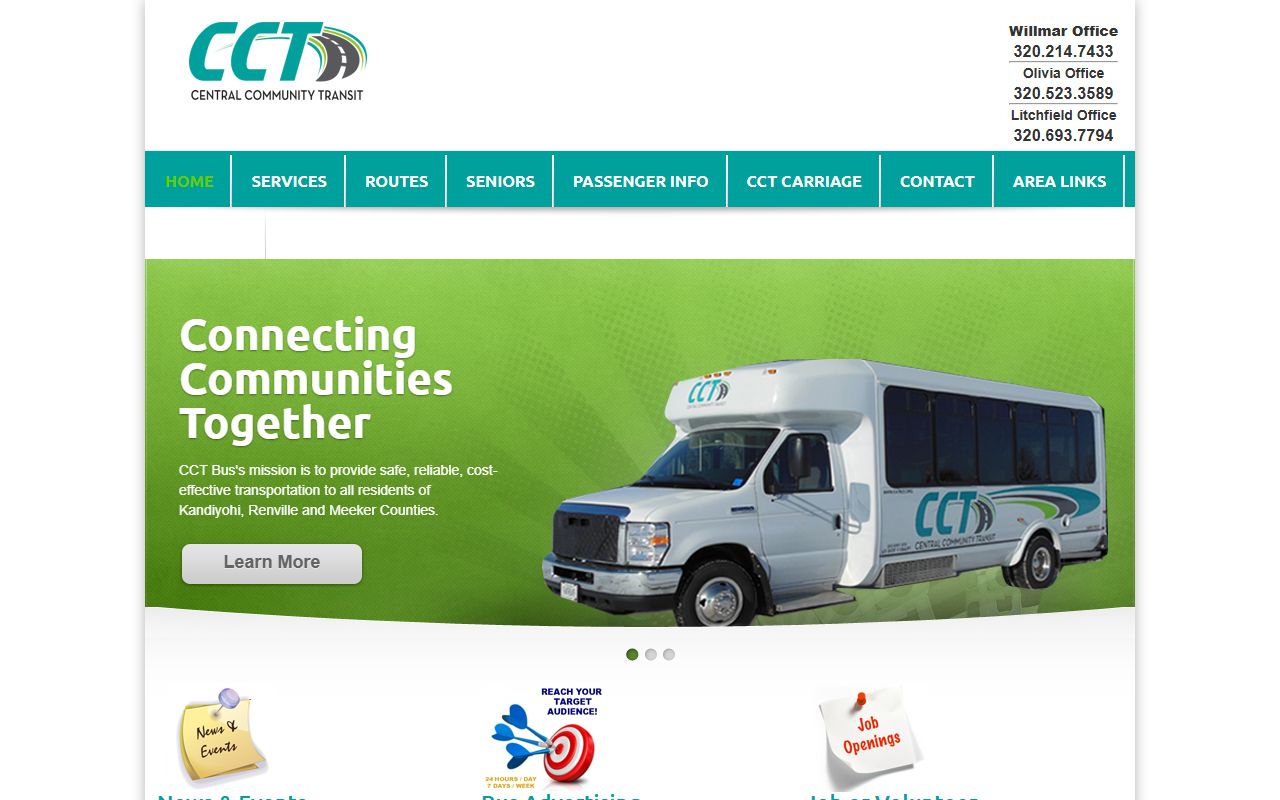
Route and schedule details should be checked before a hearing because court calendars and transit timing both change.
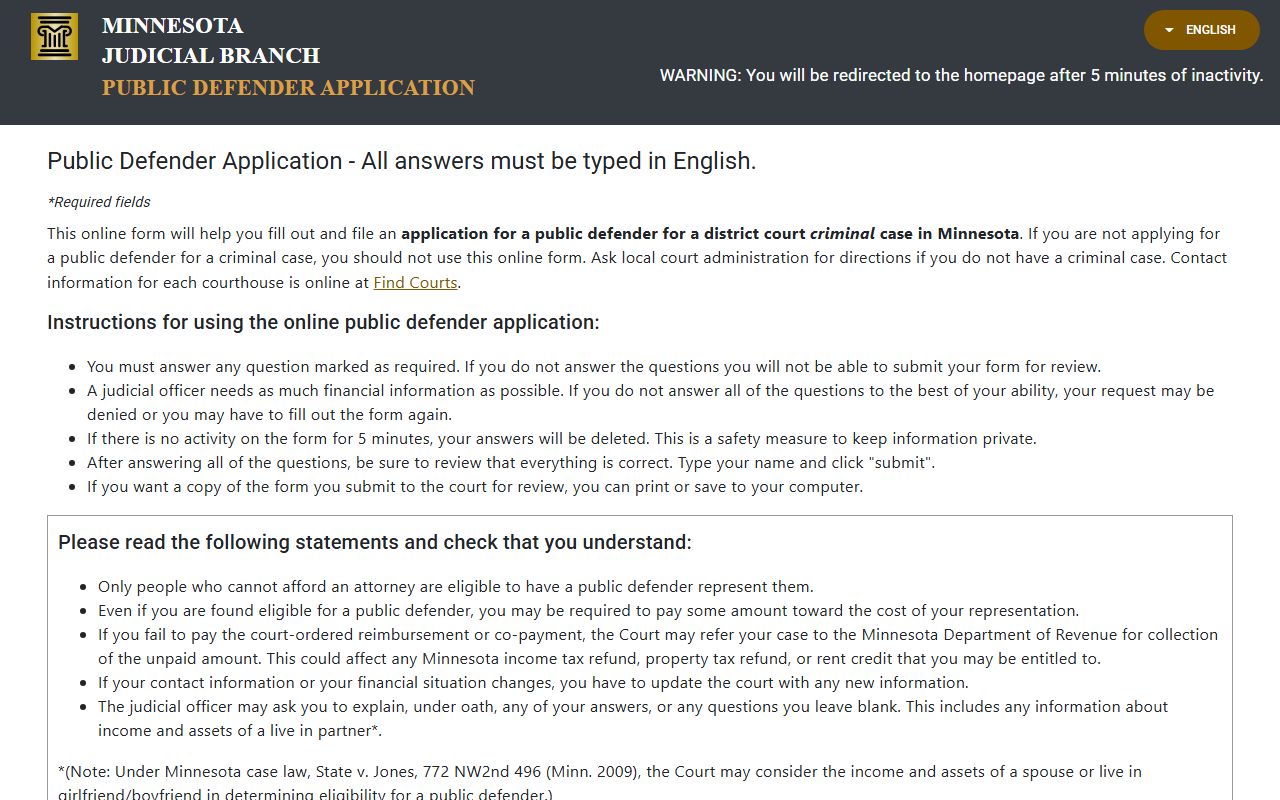
For criminal cases with possible jail time, Minnesota court resources say a person may ask for a public defender at any time, preferably at or before the first appearance. Applications can be submitted through the court process or online public defender application portal, and the court reviews financial eligibility.
The Minnesota public defender application portal is shown in the captured state resource image.
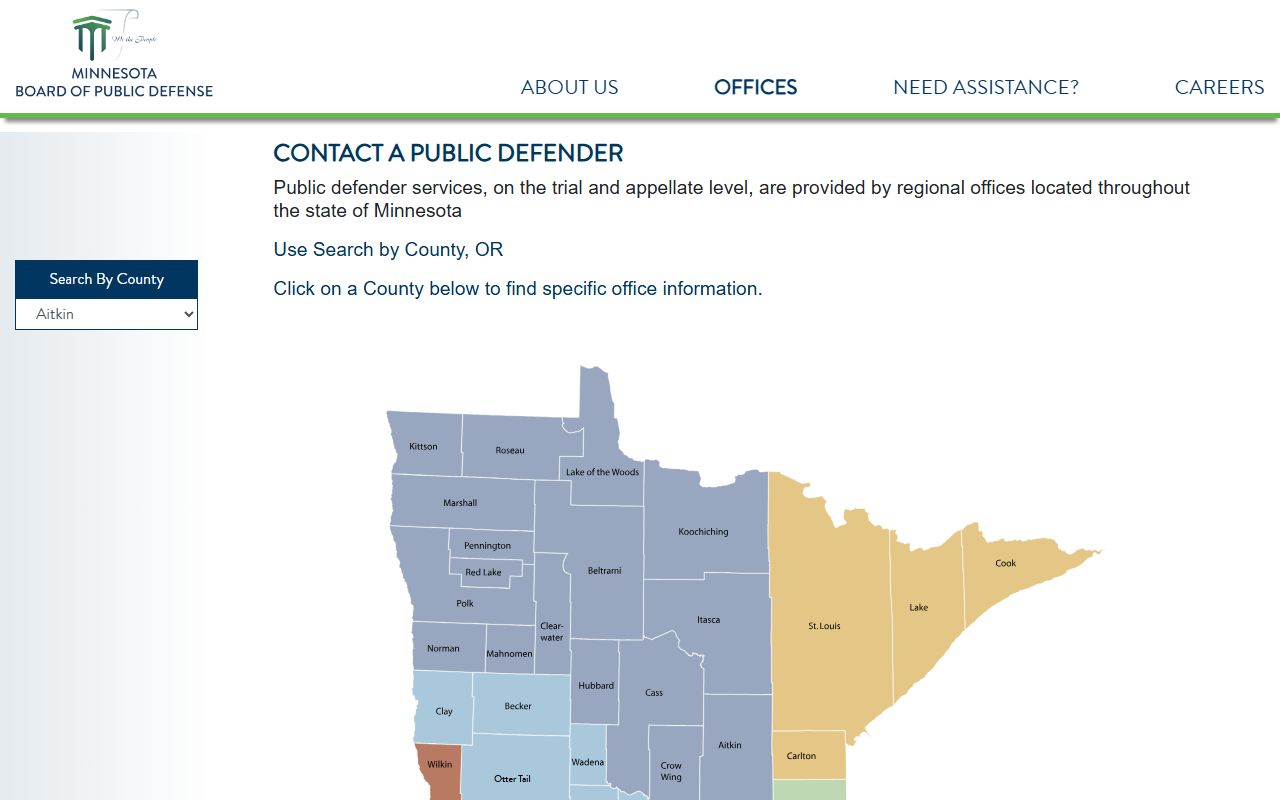
The Board of Public Defense district office directory is separate from Kandiyohi County District Court, but the application is reviewed through the court eligibility process.
Some records are federal, not county. Federal civil, federal criminal, and bankruptcy records are searched through the U.S. District Court or U.S. Bankruptcy Court for the District of Minnesota and PACER, not through Kandiyohi County District Court.
The official U.S. Bankruptcy Court for the District of Minnesota site is the county's bankruptcy-record path.
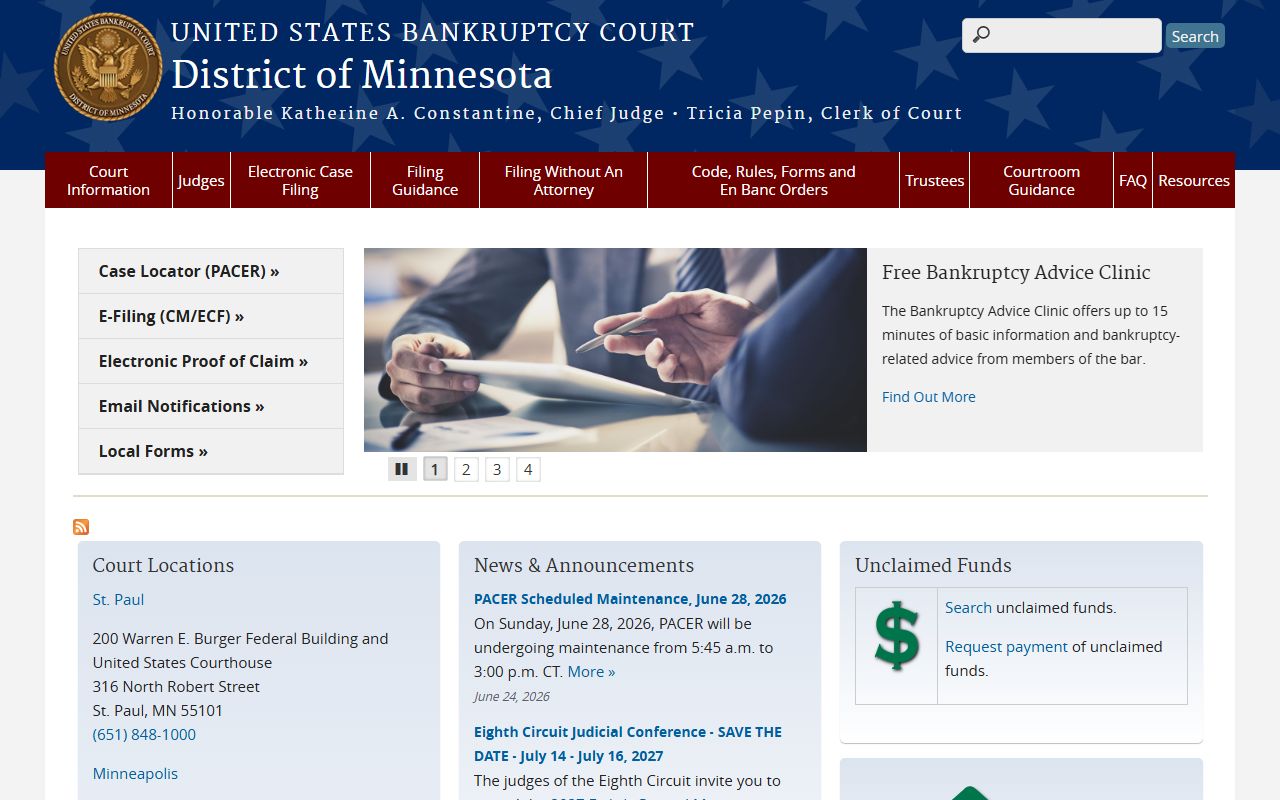
Bankruptcy cases can affect local civil or family finances, but the filing and record system is federal.
History of Kandiyohi County Courts
Kandiyohi County court history is tied to public records from the start. Voters consolidated Kandiyohi and Monongalia counties in 1870, and the county-seat fight centered partly on which place could house officials and records. Willmar built a courthouse for $2,000 that year, and a later court decree confirmed Willmar as the county seat. A second brick-and-stone courthouse followed in 1890 after grand juries found the first building unsafe.
The current courthouse was completed in 1966 by Nelson Construction Company of Willmar at a cost of $1 million, with design by Gauger and Associates of St. Paul. Its three courtrooms are finished in oak paneling, and the building later gained a third floor.
Frequently Asked Questions
Where are Kandiyohi County Court records searched online?
Use MCRO for District Court case records, hearing records, documents, and judgments. Narrow the court location to Kandiyohi when a county-only result is needed.
Who gives certified court copies?
Kandiyohi County District Court administration issues certified court copies. MCRO records and downloaded images are not official certified court case records.
Are arrest records the same as court records?
No. Jail booking and sheriff records are law-enforcement records. A District Court criminal case begins when charges are filed with the court.
Where are marriage records kept?
The Kandiyohi County Recorder handles marriage licenses and certificates. Divorce decrees are District Court records.
Can MCRO be used for background checks?
MCRO says it should not be used for background checks. Minnesota BCA Public Criminal History Search is the better public criminal-history path.
What if a pending case does not appear by name?
Pending criminal, traffic, and petty misdemeanor cases with no conviction may not return by defendant-name search. Try case number or contact court administration.